For two years, buying Microsoft 365 Copilot meant you already owned Microsoft 365. The base subscription was a prerequisite. It was also, by accident, a control. That ends on 1 December 2026. Microsoft has confirmed that new Microsoft 365 Copilot and Microsoft 365 Copilot Business offers need no qualifying Microsoft 365 base subscription. Copilot without a base subscription becomes a real purchase path. This changes how AI enters an organization, and who can authorise it.
Copilot Without a Base Subscription: What Changes on 1 December?
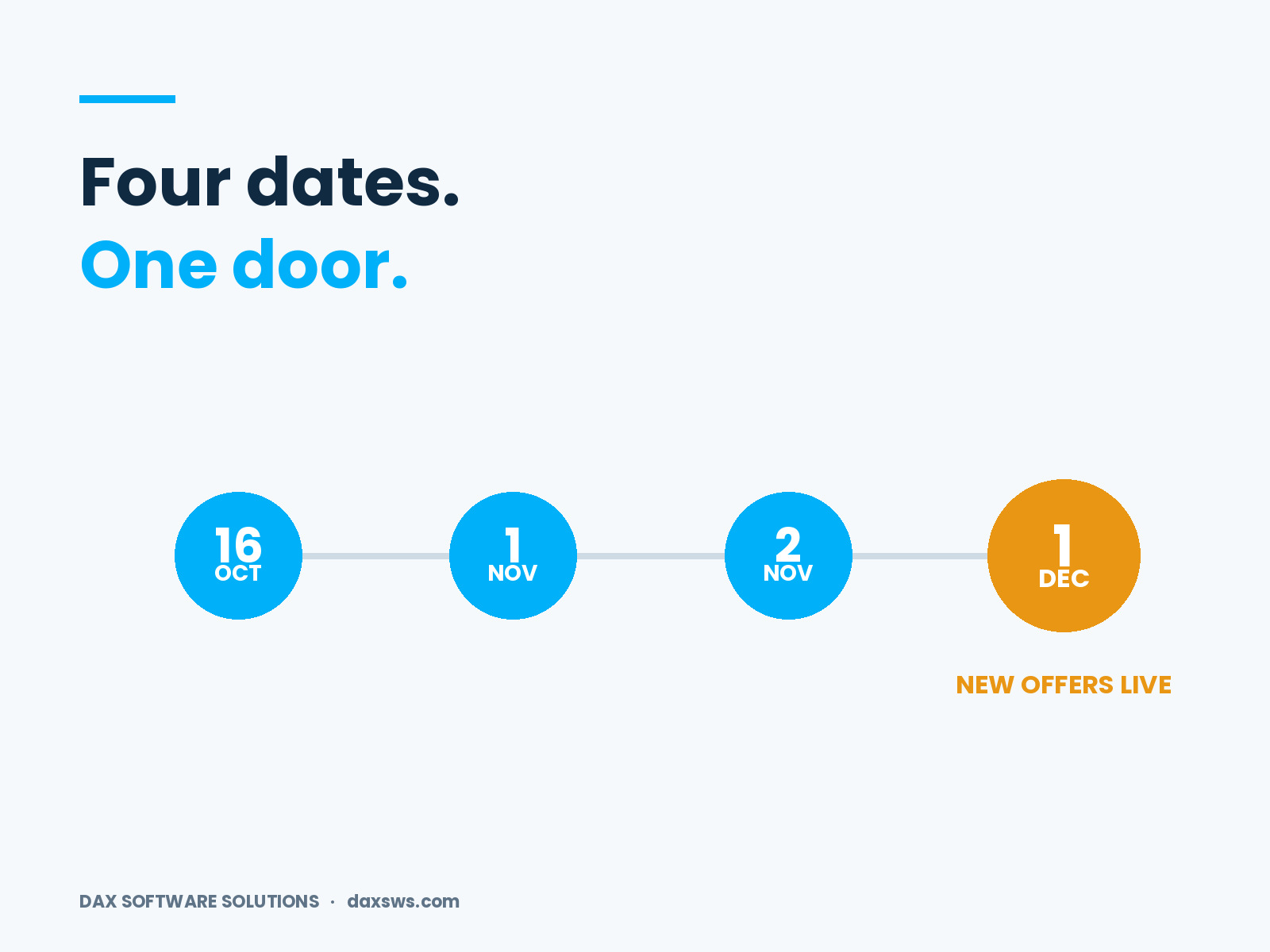
Four dates between October and December, and only the last one opens the door.Copilot becomes a product you can buy on its own. Microsoft's partner announcement sets the date at 1 December 2026. The new offers reach all channels, including Cloud Solution Provider, and cover commercial, education, government, and nonprofit customers. They carry their own product and SKU IDs, and they cost the same as the current offers.
Microsoft renamed the offers that still require a base subscription with "(add-on)" from 16 October 2026. Those reach the end of sale in CSP on 1 December. The end of sale is not the end of life, so existing customers can still renew and adjust seat quantities. Current subscriptions need nothing. IDs, pricing, renewal terms, auto-renew settings, and service all stay as they are.
Why the Base Subscription Mattered
It was never a governance feature. It worked like one anyway. A team that wanted Copilot needed seats in an estate somebody else ran. That forced a talk with IT. The talk covered identity, data access, and cost, because it had to. The gate came out of packaging, not out of a policy anyone wrote. Remove the prerequisite and the conversation becomes optional. Copilot stops sitting downstream of your Microsoft 365 estate. It becomes a thing a team can reach directly.
Who Can Authorise Copilot Now?
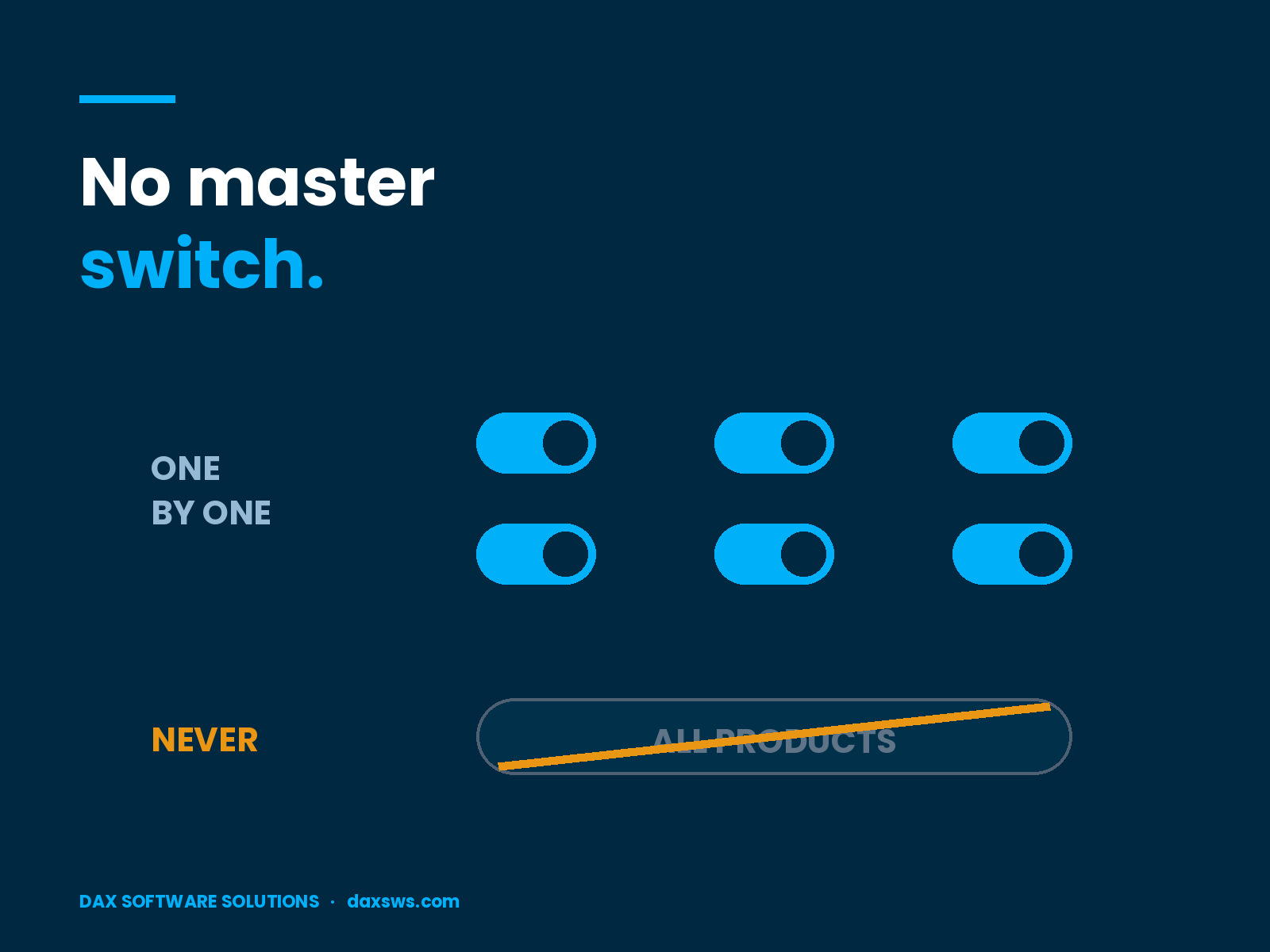
Self-service purchase is set one product at a time. There is no single switch for all of them. That depends on a setting most tenants have not reviewed in two years. Self-service purchase works product by product. Microsoft's documentation says plainly that one command cannot switch it off across the whole tenant. New products default to allowing it. A policy change also applies only from that point on, so it leaves existing trials and purchases alone.
So the practical question is narrow. Does your current policy cover the SKUs arriving on 1 December, and does anyone own the job of checking when the catalogue changes? We looked at the same pattern in Power Platform, where .
What Else Arrives the Same Day?
Usage-based billing, switched on by default. From 1 December, new Microsoft 365 Copilot Business licences bought through CSP arrive with usage-based billing already on. The default spending limit sits at 4,000 Copilot Credits per user per month, and admins can adjust it. A default is a decision somebody else made for you. Set the number deliberately, before the seats exist rather than after the first invoice. We traced how that meter behaves in .
Microsoft notes the capability is not available at launch in Australia, Belgium, Brazil, France, Germany, India, Italy, Korea, the Netherlands, Poland, and Spain. Firms working across those borders will run two models at once.
What Quietly Breaks on the Rename?
Anything that matches an offer by its name. Microsoft's partner guidance says to update scripts, catalog mappings, and automations so they use product and SKU IDs instead of offer names. That advice points at partners. It fits any internal chargeback model, licence report or buying workflow that matches on a text string.
A rename breaks string matching in the worst way. Nothing errors. The row simply stops appearing, and the number looks lower than it is.
What Should You Do Before 1 December?
Five steps, in the order the dates force.
Read your current self-service purchase policy rather than recalling it. Check whether it covers the new SKUs once Microsoft publishes their IDs.
Fix anything keyed on an offer name. Move scripts, reports, and chargeback rules to product and SKU IDs.
Decide the Copilot Credits spending limit yourself. Treat 4,000 per user per month as a starting point, not an answer.
Check which of your countries are in scope at launch, because the billing model will differ across them.
Name an owner for the entry point. Somebody has to notice when a new purchase path opens.
Does This Change What Good Adoption Looks Like?
No, and that is the point worth holding on to. A Copilot seat bought outside the estate still reaches data. It still puts out answers somebody acts on. It still needs the same questions about grounding, retention, and human oversight that a planned rollout would get.
What changed is who schedules the asking. Earlier licensing changes moved a price or a definition. This one moves an entry point, and entry points compound.
Frequently Asked Questions
Can you buy Copilot without a base subscription?
From 1 December 2026, yes. You can buy the new Microsoft 365 Copilot and Microsoft 365 Copilot Business offers without a qualifying Microsoft 365 base subscription.
Do existing Copilot subscriptions have to change?
No. Microsoft says you need to do nothing. Product and SKU IDs, pricing, renewal terms, auto-renew settings, and service all stay the same.
What does the "(add-on)" in the offer name mean?
From 16 October 2026, the offers that still require a qualifying base subscription include "(add-on)" in their names. Those offers reach end of sale in CSP on 1 December 2026.
Is usage-based billing on by default?
Yes, for new Microsoft 365 Copilot Business licences bought through CSP from 1 December 2026. The default spending limit sits at 4,000 Copilot Credits per user per month.
Can admins stop users buying Copilot themselves?
Admins manage self-service purchase product by product. No single tenant-wide switch exists, new products default to allowing it, and a policy change covers only later purchases.
What to Settle This Month
Copilot without a base subscription is not a bigger product. It is a wider door. The prerequisite was doing governance work nobody assigned to it, and on 1 December that work goes spare unless somebody picks it up. So the task is small and dated. Read the policy, fix the name-matching, choose the spending limit, and give the entry point an owner before the SKUs appear.
Microsoft's partner announcements change, and the details above come from the October 2026 notices. Confirm your own position in Partner Center or with the partner who holds your contract before acting on any of this.
At DAX Software Solutions, our AI Readiness Assessment looks at ERP stability, data quality, governance, and integration before AI reaches production. A new purchase path opening is a good reason to run that review now rather than after the first invoice. If nobody owns this in your organization yet, .